
Key Takeaways
-
If you’re planning to put your home on the market, here’s how to decide whether to replace or refresh your carpet.
-
Do your homework on what your local market expects and listen to your agent to match flooring choices with buyer tastes and generate the most interest.
-
Compare replacement costs against the anticipated sale price increase or quicker sale to estimate ROI. Think of seller credits as a more flexible option.
-
Make high-visibility rooms the priority for upgrades, go with neutral, hard-wearing materials, and time installation after painting and repairs so the home is photo-ready.
-
Think about less expensive alternatives like professional cleaning, patching, rugs or staging to make impressions without having to replace all of your carpets.
-
Whether you offer maintenance tips, warranties, or disclose new carpet work done recently, it helps calm a buyer’s fear of future costs and shows that you take care of your home.
Should you replace carpet before selling your house is a common seller question with no one-size answer. New carpet can raise buyer appeal and reduce objections during inspections, while clean, well-maintained existing flooring can save money.
Consider carpet age, stains, odour, and local market expectations when deciding. Cost, return on investment, and timing influence the choice.
The following sections outline practical steps to evaluate options and estimate potential value impact.
The Deciding Factors
Determining if you should replace carpet before selling needs an honest evaluation of condition, local market expectations, resale value impact, buyer perspective and real estate agent advice. Here, each factor is unpacked so that you can determine what action—clean, repair, partial replace, or full replace—best suits your situation and budget.
1. Carpet Condition
Check hallways, entryways, stairs and bedrooms for surface stains, soiling lines and pet hair. Tough living room or entryway stains hang around, leaving a bad impression and potential buyers imagining subtracting $5,000 to $10,000 from an offer. Sniff test rooms for pet or smoke odors. They’re tougher to cover up than stains and depreciate value.
Check age and style. Builder-grade or super old carpeting comes across as worn even if still intact. Look for major damage: burns, rips, deep gouges or pet urine spots that have soaked padding. In most cases, a deep professional clean will do. For older carpets or ground-in damage, think about a strategic patch or replacement. A $2,000 partial replacement or one bar-area patch can completely turn on buyer perception and revive a stalled listing.
2. Market Expectations
Scan local listings and recent sales and find out which floors appeal to buyers. Hard floors might be a selling feature and neutral nylon or ‘greige’ polyester carpet is usually fine. Soft, clean, move-in ready carpets in bedrooms are what first-time buyers and families want.
Note regional preferences and price tiers: upscale markets may expect hardwood, while mid-market buyers may accept new neutral carpet. If other listings have new floors, you match that so you don’t make concessions. In slower markets, old or damaged carpet will sell for more at the negotiating table, usually in credits or price reductions.
3. Property Value
A new, neutral-tone nylon or greige polyester carpet can garner an estimated 80% to 100% return on investment by preventing buyers from writing off repair expenses. Conventional wisdom still has carpet recouping just 25% to 40% of expense at sale, so full replacement is a gamble.
A sub-$4,000 flooring upgrade can often save you a $7,000 to $9,000 concession. Soiled or threadbare carpet endangers comps and buyer bids, while fresh carpet adds perceived value and draws more aggressive bidders.
4. Buyer Psychology
That’s the impression buyers create. Fresh, neutral carpet undergirds that ready-home feeling and minimizes the work it seems like. Bad carpet or odors jump-start objections and buyers exaggerate replacement hassle and cost.
Clean carpets evoke that calm, move-in ready feel, tend to reduce time on market and increase the emotional pull.
5. Agent Feedback
Get these deciding factors right and your chance for a sale increases dramatically. Agents can counsel you on whether cleaning, spot repairs, or replacement will get you the best return in your market.
Utilize their feedback to establish a rug budget and rank flooring among other repairs.
Financial Implications
When to replace carpet before selling – you need a clear picture on costs, probable reactions from buyers and how updates impact net proceeds. The succeeding subsections parse out direct costs, yields and actionable alternatives so sellers can budget and negotiate with assurance.
Replacement ROI
Calculate resale value by seeing how your cost compares with probable proposals. A new carpet in the equivalent of a 1,500-metre home, with a usual project cost of 3,000 to 12,000, stops buyers from asking for repair discounts of 5,000 to 10,000. Such avoidance can generate a compelling return on investment in the 80% to 100% range in certain sales, even though the carpet rule of thumb is that it typically only recovers 25% to 40% of its cost at sale.
Check recent sales in your area to determine if homes with new carpet sold more quickly or for more money. In a market of buyers who prefer move-in-ready homes, new flooring tends to decrease time on market and lowball offers. Focus on living rooms and master bedrooms where buyers make initial judgments. Swapping out carpet there adds disproportionate value versus less visible areas.
|
Pros |
Cons |
|---|---|
|
Makes home look updated; appeals to many buyers |
High upfront cost; may not fully recoup spend |
|
Can avoid large repair credits at negotiation |
Some buyers still want different flooring |
|
May speed sale and reduce contingencies |
Cheap carpet may show wear quickly and feel low-quality |
Alternative Costs
-
Luxury vinyl plank: mid-range cost, durable, water resistant.
-
Laminate flooring: lower cost than wood, varies in realism.
-
Engineered hardwood: higher cost, better resale appeal than carpet.
-
Full hardwood offers top-tier cost and appeal and has a higher installation time.
-
Professional carpet cleaning is a low-cost, short-term refresh but does not fix deep wear.
Compare typical costs per square metre: basic carpet replacement often sits at the low end, luxury vinyl and laminate sit mid-range, and hardwood and engineered hardwood sit at the high end. Of course, add subfloor repairs and furniture moving in totals — these things can tack hundreds or thousands onto a project.
A seller who overlooks concealed subfloor problems risks inspector discoveries that lead to more significant credits or price drops down the line.
Seller Credits
Provide a carpet allowance or repair credit so buyers select materials after closing. Credits enable the deal to go forward without the merchant having to pay in advance or handle contractors. Use inspection or even at the offer stage to negotiate credits to smooth over objections and keep timelines tight.
Credits work especially well as a benefit to distressed properties or sellers whose budgets are tight. They are flexible and do not cause sale-killing delays.
Replacement Strategy
To replace carpet before selling or not to replace carpet before selling that is the question! Start by inspecting wear, stains and odor. If the carpet looks bad, replacement nearly always makes buyers feel better and can save a price reduction. Here’s a process below to inform the decision and execution.
-
Inspect and document: Walk every room and note stains, matting, tears, and damp spots. Shoot photos of trouble areas and compare them to similar homes in the hood. Use this to gauge buyer response and consult your realtor on local standards.
-
Clean first when possible: For carpets in decent condition, a professional deep clean often restores look and smell. It costs a lot less to clean than to replace and can circumvent the usual low rebound value for carpet that often recaptures only 25 to 40 percent at resale.
-
Cost-benefit estimate: Get quotes for cleaning versus replacement. Replacing really bad carpet can prevent buyers from mentally scratching US$5,000 to US$10,000 from offers. That avoidance can lead to an efficient ROI of approximately 80 to 100 percent in decreased negotiation loss.
-
Target high-visibility areas: Prioritize hallways, living rooms, and primary bedrooms. These spaces command impressions during showings and photographs. Replacing only these high-traffic areas provides the maximum visual impact for the minimum cost.
-
Coordinate timing: Schedule installation after repairs and painting to protect new flooring. Schedule installation near listing or an open house so carpets appear and smell fresh for photos and visits. Let air and vent for new carpet smell.
-
Stage and photograph: After new carpet and paint, stage rooms and take listing photos. Collaborate with your agent to make certain the home is show-ready and floorings complement staging.
-
Final decision: If replacement cost is high and the market is price-sensitive, consider deep cleaning and disclosure along with a modest price adjustment. For markets looking for move-in-ready homes, focused replacement adds value and can help sell faster.
Material Selection
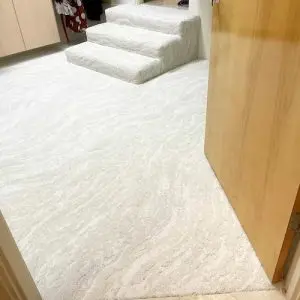
Opt for hardy, stain-resistant fibers such as nylon or polyester blends in wear-prone homes. If you have pets, seek low-pile, tightly woven carpets with stain warranties. Skip the chintzy builder-grade carpet that wears quickly. Buyers see it and they will lower their offers.
Think green fibers or post-consumer recycled materials if your buyer pool appreciates sustainability. These can be a hook in certain markets.
Color Choice
Choose neutral shades—greige, light taupe, or warm gray—that complement typical wall colors and furniture. Avoid bold or dated colors that scream customized space. Light colors make little rooms and hallways seem more spacious and airy.
We matched colors to what was current in the area so that the house read as put together and move-in ready.
Installation Timing
We only install after major repairs and full painting to prevent damage. Plan near listing dates so carpets appear new and still have time for chemical odors to dissipate. Work with your agent so staging and photography takes place post-installation and your home is photo ready.
Viable Alternatives
When to replace carpet before selling depends on cost, condition, and anticipated return. There are plenty of inexpensive alternatives to remind hardwood floors and impact buyer impression without completely ripping them up.
Professional Cleaning
Deep dirt and odor remain after DIY carpet cleaning. Employ technicians who utilize hot-water extraction (steam) or low-moisture systems, each of which lifts embedded soil. Steam cleaning is frequently preferable for deeply soiled areas and odor elimination.
Pick green cleaners too; no one likes walking into a house that still smells of chemicals, and it can put off finicky buyers. Plan to clean once you’ve decluttered and moved furniture so the machines can get to baseboards and high-traffic pathways.
This provides an opportunity to address under furniture wear. Advertising newly cleaned carpet screams regular maintenance and may be as effective as new carpet in homes where the pile is still intact. For sellers in humid climates, save yourself a mold replacement disaster by pairing cleaning with a moisture check.
Strategic Repairs
Targeted repairs are significantly less expensive than replacement and treat the worst-looking issues. Patch little holes or burns with samples swiped from a closet or secret stash. A matched patch done properly is almost invisible.
Re-stretch loose or wrinkled carpet to eliminate trip hazards and improve the room’s lines. This easy fix usually makes rooms look newer. Focus on high-impact zones: entryways, stairs, and closet thresholds.
Handle pet stains with enzyme treatments or replace only the stained underlay and carpet squares in case of localized staining. If the carpet is old everywhere, don’t replace it all, just bad spots like maybe the living room, and leave the bedrooms alone. Buyers tend to notice focal rooms first.
Home Staging
Staging changes how buyers see flooring and can distract them from defects. Deploy area rugs strategically over eroded spots and to establish defined zones. Neutral-hued rugs will be your best friend when it comes to keeping your palette open and wide.
Rearrange furniture to mask worn spots and create open traffic patterns, emphasizing pristine, beautiful hardwood or tile patches. Throw in plants, art, and balanced lighting to pull the eye upward and make rooms feel bright and well cared for.
Provide a carpet-work credit in the sale contract as a viable alternative. Buyers may prefer the cash and carpeting options to take care of flooring themselves, particularly where vinyl or engineered wood are all the rage.
Think about current market tastes and carpet age when making staging moves. A neutral, well-kept carpet can be a viable alternative to replacement when combined with powerful staging.
The Unspoken Message
About: The unspoken message Carpet condition broadcasts an instant, silent message regarding home care. Buyers see stains, wear, and odors before they see anything else, and then they extrapolate maintenance habits from that. Nice carpet means recent attention and pride of ownership.
Bad carpet can cause buyers to mentally deduct thousands from the value of the home or just walk away. Here are explicit buyer perception do’s and don’ts.
-
Do: Replace heavily stained, smelly, or threadbare carpet before listing.
-
Do: Steam clean carpets that are structurally sound and free of deep wear.
-
Do: Use neutral colors and low-pile styles for broader appeal.
-
Do: Keep documentation for recent replacement or professional cleanings.
-
Don’t: Mask odors with air fresheners. Purchasers will still sense hidden odors.
-
Don’t: Leave visible pet damage or burn marks. They hint at covert problems.
-
Don’t: Assume buyers will accept old styles. Old carpet can say old house.
-
Don’t over-improve with ultra-high-end carpet in a modest neighborhood.
Perceived Maintenance
New carpet means the owner maintained. Provide maintenance tips for new carpet: vacuum twice weekly with a HEPA filter vacuum, blot spills immediately with a neutral detergent, schedule professional cleaning every 12 to 18 months, and use entry mats to reduce tracked-in grit.
Prospective purchasers fret over dog pee, kitty pee and cat dander. Flash recent professional cleaning reports or replacement receipts to appease those fears. Talk up warranties or original manufacturer guarantees that are still in effect and provide a limited home warranty covering stains or imperfections to assuage wary buyers.
Calling attention to recent cleaning or replacement as regular maintenance makes the house feel move-in ready. Even little notes such as the last clean date, carpet fiber type, and suggested care steps assist buyers in envisioning an easy-care future.
Future Costs
Reveal carpet enhancements upfront in your listing and showings. A note that carpet was replaced in the past two years alleviates buyer concerns over immediate flooring costs and can stop lowball offers.
Buyers tend to double fix-it costs in their head. They swap out the carpet up front so they’re not planning on new flooring immediately after a break-in. They take new carpeting as a selling point to lessen the sense of potential replacement down the line and really consider remaining useful life when pricing.
If you don’t replace, measure possible replacement costs and adjust price. That honesty saves time and prevents deadlocked negotiations later.
Overall Home Care
Clean carpets act as proof of steady home upkeep and tie into other visible care: fresh paint, tidy landscaping, and fixed fixtures. Fix any minor carpet issues, such as loose seams and small stains, before listing to demonstrate your attention to detail.
If you use before and after photos in your marketing, that’s the kind of thing that turns lookers into higher bidders. By showing that you addressed even minor surface issues, it lessens buyer skepticism that there are more significant hidden problems.
Global Flooring Preferences
Buyers in many markets now prefer hard surfaces to carpet, which plays into if it makes sense to replace carpet before a sale. Hardwood, engineered wood, and LVP are viewed as timelessly strong and good looking. Hardwood has a timeless cachet in historic neighborhoods, while engineered wood provides a comparable aesthetic with enhanced moisture-resistant qualities and frequently comes at a reduced price.
LVP is popular where moisture and heavy wear are at issue because it resists spills and humidity and still looks like wood. Regional trends color expectations. In colder places, carpet is still prevalent in bedrooms, basements, and some living rooms because it provides insulation and warmth. In hot, sweaty locations, carpet is a liability because it traps moisture and can have mold and mildew, which many buyers see and hate.
Research local listings and recent sales to see what attracts buyers where you live. If most comparable homes show hard floors in main areas, buyers will likely expect the same. Main living areas are what count. Installing new wood floor in entryways, living rooms, dining rooms and kitchens is likely to have a more widespread appeal than doing the same in secondary bedrooms.
Buyers make their first impression in these spaces, so tough hard flooring can enhance perceived value. I find that in other markets, engineered wood or LVP in main areas gives a clean, low-maintenance look that many buyers prefer to tired or dated carpet. If budget is tight, substitute carpet in the spotlight areas and keep newer, clean carpet in the bedrooms.
Take climate and construction into account when you select a product. In homes with muggy, damp basements, LVP or tile are a better choice than engineered wood. For areas with large seasonal humidity variations, select materials with strong dimensional stability. For beach or moisture-heavy regions, steer clear of carpet in ground-floor and entry areas to minimize mold potential.
For colder inland areas, leave carpet in bedrooms where owners anticipate warmth underfoot. Price and resale hopes should be your guide. New carpet generally recoups only 25 to 40 percent of its cost on resale, so its ROI is modest. By comparison, carefully selected hard flooring is on quite a few buyers’ wishlists.
Flooring upgrades are among the improvements desired by approximately 26 percent of homeowners and might cause a home to sell more quickly. Buyers can be freaked out by old or shabbily worn out carpet, so if replacing isn’t an option, deep clean it or take it up temporarily to reveal existing hardwood or tile underneath.
Align your selection with local buyer preferences, climate concerns and budget limitations to find the optimal cost and marketability balance.
Conclusion
Selling a house soon demands lean, obvious decisions. New carpet can increase appeal in photos and open house visits. It’s more expensive up front but can reduce days on market and increase offers in a competitive neighborhood. Clean, repair, or replace high-traffic areas if your budget restricts you. Pick a neutral color and a wear-resistant pile if you do replace. Consider low-cost fixes: deep clean, pad swap, or staged rugs over worn spots. In markets where hard floors are preferred, bypass full replacement and showcase your existing wood or tile. Weigh cost versus likely return using local comps and a quick estimate from an agent. Want to crunch the numbers for your home? Request a quick checklist and local price range to help direct your next step.
Frequently Asked Questions
Should I always replace carpet before selling my house?
No. Replace carpet before selling your house? Buyers appreciate clean, neutral flooring more than new carpet in every room.
How much does replacing carpet add to resale value?
It depends. Anticipate small returns that are frequently below cost unless you’re swapping for a universally sought-after floor type such as neutral hardwood or premium vinyl.
Which rooms should I prioritize for replacement?
Focus on living rooms, stairs, and master bedrooms. These are the rooms that impact buyers the most and demonstrate the home is well cared for.
Can I boost sale appeal without replacing carpet?
Yes. Deep clean it, shampoo it, repair seams, and deodorize. Professional cleaning, on the other hand, usually provides a more powerful visual and aroma impact for less money.
Is it better to install hardwood or high-quality vinyl instead?
Good quality vinyl is long-lasting and less expensive. Hardwood appeals to certain buyers and can increase value in certain markets. Decide based on what local buyers want and what you can afford.
Will old carpet turn buyers away during inspections?
Not generally. Inspectors point out safety and structural concerns. Serious mold or pest issues from carpet can impact inspection reports and offers.
How do I decide based on my local market?
Review some current listings and consult with a local real estate agent. Local data reveals buyer preferences and estimates return on flooring investments.