Key Takeaways
-
Luxury vinyl provides waterproof, scratch-resistant style with convenient DIY installation and great value per square meter. This makes it a popular pick for heavy-duty RV and park model floors.
-
Sheet vinyl is the most cost-effective, seamless treatment for wet areas and it weighs less than many other options, putting less stress on your vehicle’s weight allowance.
-
Laminate is cost-effective and gives you the look of wood. Select waterproof types and let it acclimate to avoid warping.
-
Engineered hardwood offers a genuine wood look with more resistance to expansion and contraction than solid hardwood. It needs more subfloor preparation and can be pricier per square meter.
-
Cork provides natural insulation and soundproofing for comfort-minded areas and requires adequate sealing to protect against moisture.
-
Floor always match flooring to weight limits, moisture exposure, temperature changes and maintenance capability. Plan for proper underlayment, expansion gaps and low-VOC materials to protect comfort, air quality and long-term value.
Best flooring for RV and park model homes is rugged, water resistant and lightweight. Among the more popular options are luxury vinyl plank, waterproof laminate, and marine-grade carpet, all traffic- and moisture-rated.
Vinyl plank provides simple installation and minimal upkeep, whereas waterproof laminate provides a wood appearance at a reduced price. Consider thickness, wear layer, and adhesive type for years of use.
The guide below provides a comparison of choices and installation advice for small spaces.
Top Flooring Choices
Select flooring that strikes a balance between trendiness, heaviness, moisture resistance, and maintenance. Your perfect floor should resist temperature fluctuations and shifting, remain lightweight to meet towing or park model restrictions, and suit your desired interior style.
Top Flooring Choices – Here are 5 of the top choices with performance, cost, installation, and practical trade-offs.
1. Luxury Vinyl
-
LVP is waterproof, scratch-resistant and typically costs much less than real hardwood. It resists dents better than most soft woods and features a variety of wood and stone visuals, creating that premium look without the burden of actual wood.
-
LVP imitates real wood or stone with high-resolution photographic layers and a hard wear layer, so you get authentic grain and color without the upkeep of actual hardwood.
-
Installation is often DIY-friendly. Click-lock systems float over underlayment, while peel-and-stick works on smooth subfloors. Both save time and labor cost.
-
Minimal maintenance is another huge advantage. Weekly sweeping and damp mopping does the trick and it resists high-traffic areas. Cost per square metre goes from low to mid, giving you a lot of value in terms of durability and style.
2. Sheet Vinyl
-
Sheet vinyl is an economical, moisture-resistant option that is perfect in kitchens and bathrooms where water is a constant threat.
-
Its continuous installation minimizes water seepage and simplifies cleanup. Fewer seams lead to fewer dirt traps.
-
Coming in myriad colors, patterns, and textures, sheet vinyl can complement even the most eclectic décor while remaining light. This is a handy feature for RVs with stingy weight limits.
-
Typically cheaper per square metre than LVP, although potentially less long-lasting. Total value is tough where moisture control and low cost mean the most.
3. Laminate Planks
-
Laminate provides a hardwood appearance at a fraction of the cost and is very resistant to scratches and dents. It is ideal for active family rooms.
-
For RVs, choose waterproof laminate! It deals with humidity and spills far better than older laminates.
-
Tongue-and-groove installation is simple for DIYers. The layered construction provides stability.
-
Cost is mid-range and the surface is difficult to dent, making for a durable, affordable alternative.
4. Engineered Hardwood
-
Engineered hardwood features a multilayer construction that maintains its stability during temperature and humidity fluctuations. It is more stable than solid hardwood.
-
The top layer is real wood, leaving you with true grain and texture for that traditional look.
-
Select cabin grade or first-quality planks for mobile applications and prep the subfloor diligently to prevent warping.
-
It’s more expensive per square metre and can be refinished several times, providing long term value.
5. Cork Flooring
-
Cork is green, feels soft on your feet and provides natural sound dampening. It is great for snug, hushed spaces.
-
It’s cozy and warm to the touch, adding comfort in colder climates.
-
If sealed correctly, cork resists mold and moisture. Maintenance is easy.
-
Ideal for comfort and warmth in zones that do not experience heavy wear.
Critical Selection Factors
Choosing flooring for an RV or park model is a matter of matching material properties to the distinct stressors of mobile and compact living. Briefly below is an outline of the critical selection factors to consider, followed by a more in-depth discussion on weight, durability, moisture, and temperature.
-
Heavy impacts vehicle limits and fuel consumption.
-
Durability under high traffic, pets, and furniture movement.
-
Moisture resistance for condensation, spills, and leaks.
-
Thermal stability for expansion, contraction, and varying climates.
-
Maintenance needs and long‑term upkeep costs.
-
Budget and resale value implications.
-
Space constraints and foot traffic of units under 37 square meters (400 square feet).
-
Customization limits in park models and prioritizing needs.
Weight
Heavy flooring increases the truck’s curb weight, decreases payload capacity, and can even impact fuel economy. When it comes to park models and towables, every kilo matters, and solid hardwood or stone tile add weight, which impacts towability and legal weight limits.
Go lightweight as much as possible: LVP, thin-gauge laminate, cork—anything to keep weight down but still feel solid. Do the math on total flooring weight. Multiply the weight per square meter of the product by your unit’s floor area and then compare that to your RV’s payload margin before you purchase or retrofit.
Stay away from heavy natural stone or thick oak when payload is tight.
Durability
Durability counts in high traffic areas and where furry family members or kiddos roam. Scratch and dent resistance should come first, and wear layers in LVP or AC ratings for laminate come second.
Engineered hardwood offers a middle ground: a real wood surface with more stability than solid plank. Look at the Janka hardness score when comparing different wood species. The higher it is, the more resistant it is to denting.
Tough floors save you hassle down the road and preserve resale value, which is a big deal when park models can cost anywhere from around $20,000 to over $100,000 and tend to depreciate.
Moisture
RVs have condensation, unexpected leaks and fluctuating humidity. Choose waterproof or highly water-resistant surfaces in kitchens, baths, and entry zones: sheet vinyl, waterproof LVP, or rubber flooring.
Stay away from traditional hardwood and carpet in these areas. They hold moisture and rot subfloors. Prior to installation, shop and seal the subfloor to prevent moisture penetration.
Regular seasonal maintenance and winterization shield floors in cold climates that require insulation and heating enhancements.
Temperature
Expansion and contraction are caused by temperature swings. Dimensionally stable materials, such as engineered hardwood and luxury vinyl, outperform solid hardwood or cheaper laminate.
Let new flooring acclimate inside the RV for 48 to 72 hours so it adjusts to the unit’s temperature and humidity. Handle transitions to other floors and expansion gaps to avoid warping in hot or cold weather.
Installation Challenges
Putting in new floors in RVs and park model homes brings its own set of challenges that aren’t present when working in a typical house. Tight spaces, light-weight framing and changing climates make the challenge even greater to plan, select materials and level of skill.
The subsections that follow discuss the primary practical concerns and measures to minimize danger and expense.
Essential tools and materials for DIY installation:
-
Tape measure, chalk line, straight edge, and carpenter’s square
-
Utility knife, suitable saw for material (jigsaw, circular saw), sanding block.
-
Spacers, tapping block, pull bar, and rubber mallet
-
Moisture meter, level, and shims
-
Underlayment or vapor barrier, adhesive (odorless, waterproof or marine grade) and seam tape.
-
Trim, threshold strips, and fasteners
-
Safety gear: gloves, goggles, mask
Go for simple solutions, such as click-lock floating floors or superior peel-and-stick vinyl planks, to minimize install time and eliminate specialized tools. Some materials still need pros.
Engineered wood often rates five out of five for installation difficulty and may require fastening, acclimation, and precise joins. Tile and stone bring both material and labor costs. Anticipate much higher installation rates, often four to eight dollars per square foot for labor alone in many markets.
Subfloor Preparation
A clean, dry, and level subfloor is the single most important contributor to a long-lasting floor. Chisel up old flooring and any junk. Check dryness with a moisture meter.
If it’s soft, rotted, or just structurally compromised in any way, replace or repair the section before continuing. Small depressions or protrusions can be smoothed with patch compounds, but more serious structural problems necessitate joist repair.
Install a moisture barrier or advised underlayment to guard against condensation and road-driven humidity swings. Most flooring warranties will demand certain underlayments and appropriate subfloor preparation.
Don’t install new floors over bumpy or spongy subfloors because it reduces longevity and invalidates warranties.
Expansion Gaps
Floors shift with humidity and temperature. Ensure that you leave uniform expansion gaps, usually about 6 mm (1/4 inch), around perimeters and immovable objects.
With large gaps, use spacers to keep the gap size consistent during installation. Remove them before installing trim.
Conceal expansion gaps with quarter round, reducer strips or other molding to maintain a clean appearance and allow movement. Not leaving these gaps can lead to buckling, warping and visible stress at seams, in particular for laminate and engineered wood which are sensitive to moisture fluctuations.
Adhesive Choice
Choose adhesives appropriate for your flooring material and subfloor. For RV and park model applications, odorless, waterproof adhesives minimize fumes and combat moisture.
Adhere to manufacturer recommendations for application patterns, trowel sizes, and curing times. In wet rooms or high humidity environments, utilize marine-grade adhesives and seam sealants for added security.
Incorrect adhesive or hasty curing causes bond failures and expensive rework. Keep interior humidity around 30 to 50 percent to minimize shrinkage or gapping for susceptible materials.
The Unseen Impact
Flooring options aren’t just a matter of aesthetic appeal. They influence thermal comfort, noise isolation, and air quality in RVs and park model homes. With minimal square metres and tight proximity, invisible properties of flooring transform everyday existence, energy consumption, and lifetime wellness.
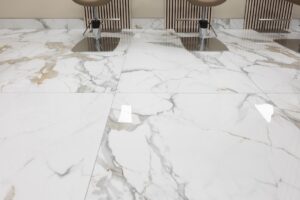
Think about how insulation value, underlayment, material off-gassing, and sound control interact. Consider lifestyle changes associated with small-space living, equity objectives, and neighborhood regulations when selecting a floor that suits serving as a primary residence, getaway accommodation, or rental.
Insulation
Some materials just trap heat better. Cork and padded vinyl have higher R-values for thin-floor systems, so they keep feet warmer and decrease the load on space heaters. Insulating underlayment—closed-cell foam or thin radiant-barrier layers—reduces heat lost through subfloor crevices and fastens coziness in chilly weather.
In extreme climates, insulation keeps park models livable year-round. In cold areas, insulated floors minimize condensation and cold pockets that make residents shuffle schedules or avoid certain rooms. In hot climates, reflective underlayments provide assistance by restricting heat gain at the floor surface.
For seasonal owners who rent, superior insulation safeguards the interior and reduces energy expenses in between renters. Bad insulation drives up energy costs and leaves interiors uncomfortable. That can eat away at the economical appeal of park model ownership and influence resale or rental desirability.
Good insulation is a minor initial expense with tangible payoffs in comfort and operating costs.
Sound
Flooring and underlayment selection will play a big role in noise from footsteps, pipes, and the exterior. Hard surfaces such as thin laminate without padding carry impact and airborne noise fast. Cork, rubber, and padded vinyl absorb sound at the strike point, restricting echo in open plan park models and minimizing disruption to slumbering occupants.
When replacing surfaces, utilize sound-dampening underlayment beneath hard floors. An acoustic underlay that is 3 to 5 mm thick can reduce footstep noise significantly and enhance privacy between living and sleeping areas. In communal or rented units, silent floors lower gripes and increase tenant loyalty.
Silent floors encourage peaceful naps and more peaceful days, particularly in smaller floor plans with close-together rooms. Select materials that align with the building’s vibration signature and intended use. Think thick cork in living areas and resilient rubber under appliances.
Air Quality
Choose low-VOC, non-toxic flooring to guard indoor air in these small, sealed spaces. Vinyl and engineered products differ a lot. Seek out certified low-emission seals and skip over anything that smells like a chemical factory when installed.
Off-gassing in a tiny home compounds these poisons fast and can exacerbate allergies or asthma. Daily washes keep dust and mold build-up at bay, while sealed cork and smooth vinyl are easier to maintain allergen-free than loosely fitted carpets.
Hypoallergenic alternatives like well-sealed cork or high-quality vinyl straddle moisture resistance and surface purity, assisting residents who embrace minimalist lifestyles or plan to lease the unit.
Long-Term Ownership
Long-term ownership of an RV or park model home involves thinking beyond initial cost and appearance. Flooring should endure hard wear, changing surroundings, and the potential for relocation or resale. Consider maintenance, repairability, and lifespan as one.
Pair flooring selection with lifestyle, travel frequency, and intention to own the unit for years or not. Set aside some funds for the occasional repair or replacement. Many owners estimate one refresh every 7 to 10 years, depending on use.
Maintain indoor humidity levels between 30 and 50 percent to minimize warping, gaps, and other moisture damage.
Maintenance
Tailor it to your floor type and everyday usage. For example, sweep daily or every other day, mop with manufacturer-recommended cleaner weekly, and deep clean or reseal surfaces seasonally.
Opt for stain, scratch, and moisture resistant floors to reduce cleaning time and minimize repair requirements. LVP and porcelain tile are popular options for this reason. Stick to cleaning products the manufacturer permits.
Harsh chemicals or abrasives can peel finishes or dull wear layers. Wipe up any spills immediately to prevent liquids from soaking into seams or backing materials and to avoid staining and mold.
Repairs
A few floors render spot repairs easy. Floating vinyl or laminate planks can be extracted and swapped out individually, which saves time and money in the event of a pet or dropped tool causing damage.
Store a few spare planks or tiles from the initial job in a dry location. It is easier to match color and profile down the road with originals in hand.
Glued-down or seamless choices like sheet vinyl are more difficult to repair, as a ripped portion typically requires patching from a professional or an entire sheet swap. Check seams, transitions, and high-traffic areas twice a year for loose edges, lifting, or gaps that might have started before they got out of control.
Lifespan
|
Flooring Type |
Typical Lifespan (years) |
|---|---|
|
Luxury vinyl plank (LVP) |
10–20 |
|
Laminate |
7–15 |
|
Porcelain/ceramic tile |
20–40 |
|
Sheet vinyl |
5–15 |
|
Engineered hardwood |
10–25 |
Better materials tend to have longer life and better resale value, which is important for park model homes that often retain or appreciate in value.
Moisture, severe foot traffic, bad installation, and extreme humidity fluctuations reduce lifespan. Review manufacturer warranties for an indicator of anticipated wear and adhere to installation specifications diligently to prevent problems such as gaps or warping.
Consistent maintenance, immediate repairs, and smart materials selections all make long-term ownership less of a wild card and less expensive.
Materials to Reconsider
A lot of typical flooring options that would work in a house are just bad fits for RVs and park models due to weight limits, moisture exposure, movement, and very tight budgets. Here’s a transparent look at ingredients to reject or handle carefully, why they flop in mobile environments, and real-world illustrations to inform your choices.
Carpet is weighty, catches dampness and mops up messes and grime readily. In tight, mobile quarters, carpet wears out quickly in high-traffic areas and stains easily, requiring regular cleaning and replacement. Carpet fibers conceal mold and mildew when wet.
For soft-feel bedrooms, think about a thin, removable area rug over a hard surface rather than wall-to-wall carpeting.
There’s traditional hardwood. Beautiful, yes, but heavy and expensive to install. It expands and contracts with temperature and humidity fluctuations typical of mobile homes, creating gaps or bending. Hardwood requires expert installation and occasional refinishing, translating into additional expense and downtime.
Low Janka woods peel or dent under heavy furniture and kitchen traffic, so hardwood isn’t often feasible unless weight and climate are carefully managed.
Stone tile is another option. Natural stone or ceramic tile adds significant weight and a stiff surface that can fracture with chassis flexing. Grout soaks up moisture and dirt and repairs are a pain on the road. Stone boosts fuel use because of additional weight.
For a stone look without the weight, go for lightweight porcelain planks or luxury vinyl that emulate tile without the negatives.
Cheap laminate and particle-board tchotchkes are also problematic. Cheap laminate and particle-board underlayment don’t do well with moisture and movement. Laminate is only slightly water resistant, and seams swell and delaminate if saturated.
Most cheaper ones have a particle board core that rots and puffs when wet. Laminate can sound hollow underfoot, which sounds cheap in close interiors. When selecting laminate, opt for moisture-resistant cores and more secure locking systems designed for on-the-go lifestyles.
Peel-and-stick vinyl tiles and budget vinyl present their own challenges. Peel-and-stick tiles may be simple to install but wear out rapidly beneath heavy furniture and relentless shoe leather. Cheap vinyl sheets or tiles will dent from appliance or furniture legs and scratch.
Vinyl is great when specified for RV or commercial use, but steer clear of the lowest grades and shield heavy points with pads.
Engineered wood resists certain dimensional change but remains vulnerable to moisture. Spills must be promptly cleaned. Bathrooms and humid environments are a dangerous place for engineered wood.
Apply it exclusively to dry surfaces and opt for mobile home-specific products. Specializing in products for RVs and park models minimizes risks of mold, rot, and warping while maintaining light weight and easy upkeep.
Conclusion
Selecting the proper floor for your RV or park model home is a matter of comfort, care, and your wallet. Vinyl plank provides water resistance and easy installation. Engineered wood offers a warm hardwood look with less swell than solid wood. Low-pile carpet provides sound control and softness beneath the feet in the sleeping areas. Cork and rubber cut impact and slip hazards in heavy-use areas.
Consider weight, exposure to moisture and how often you relocate the unit. Consider tools you already have and the difficulty of the install. Schedule minor repairs down the road and choose simple to switch out areas such as the kitchen.
If you need assistance matching a floor to your setup, send me your budget, climate, and daily use and I will suggest a shortlist of options.
Frequently Asked Questions
What is the best flooring for RV and park model homes?
Your best bet is waterproof luxury vinyl plank (LVP). It is waterproof, rugged, quiet, and appears like actual wood. It hits a sweet spot for price, installation, and durability for tiny, transportable dwellings.
Is laminate flooring a good option for RVs?
Laminate can work if you stick to waterproof, low-profile varieties. It’s less forgiving to moisture and movement than LVP. Because it’s not water resistant, use only in dry areas and with the proper underlayment.
How important is weight when selecting flooring?
Extremely important. Lighter materials such as vinyl and thin engineered wood minimize fuel consumption and strain on axles and foundations. Always verify your RV or park model weight limits before opting for heavy tiles or dense concrete substitutes.
Do I need special underlay for RV flooring?
Yes. Employ underlayment that is built for movement and sound absorption. It levels subfloors, offers thermal insulation, and shields against minor moisture. Select items that work with your type of flooring.
How do temperature changes affect flooring choices?
Temperature swings will cause expansion and contraction. Resilient products like LVP and engineered wood respond better to these shifts than stiff tile or sheet vinyl. Leave expansion gaps during installation.
Can I install flooring myself in an RV or park model?
Yes, a lot of homeowners can put down some LVP or click-lock engineered wood. Measure carefully and don’t forget to compensate for curved walls and appliances. Pay close attention to the manufacturer’s instructions. Hire a pro for glue-down or complicated layouts.
Which materials should I avoid for RVs and park models?
Skip heavy ceramic tile, unfinished solid wood, and non-waterproof carpet in moisture-ridden locations. These materials add weight, risk damage, and maintenance requirements to any mobile or semi-permanent home.